Sydney Martinez, Finding Nevada Wild: The Terrain, Culture, and People of the Most Mysterious State in the West (Schiffer Publishing), 320 pp. Hardback, $34.99.
As Sydney Martinez observes in the first chapter of her new book, Finding Nevada Wild, the Sagebrush State is “a ceilingless arena of go-anywhere, crowd-free adventure,” and too often tourists fix their gazes on Las Vegas and Reno and ignore other incredible opportunities for exploration. Martinez, a writer and photographer, extols the virtues of turning off the highways and heading down the dirt roads that lead to the relatively unvisited nooks and crannies of what she refers to as “the most misunderstood state in America.”
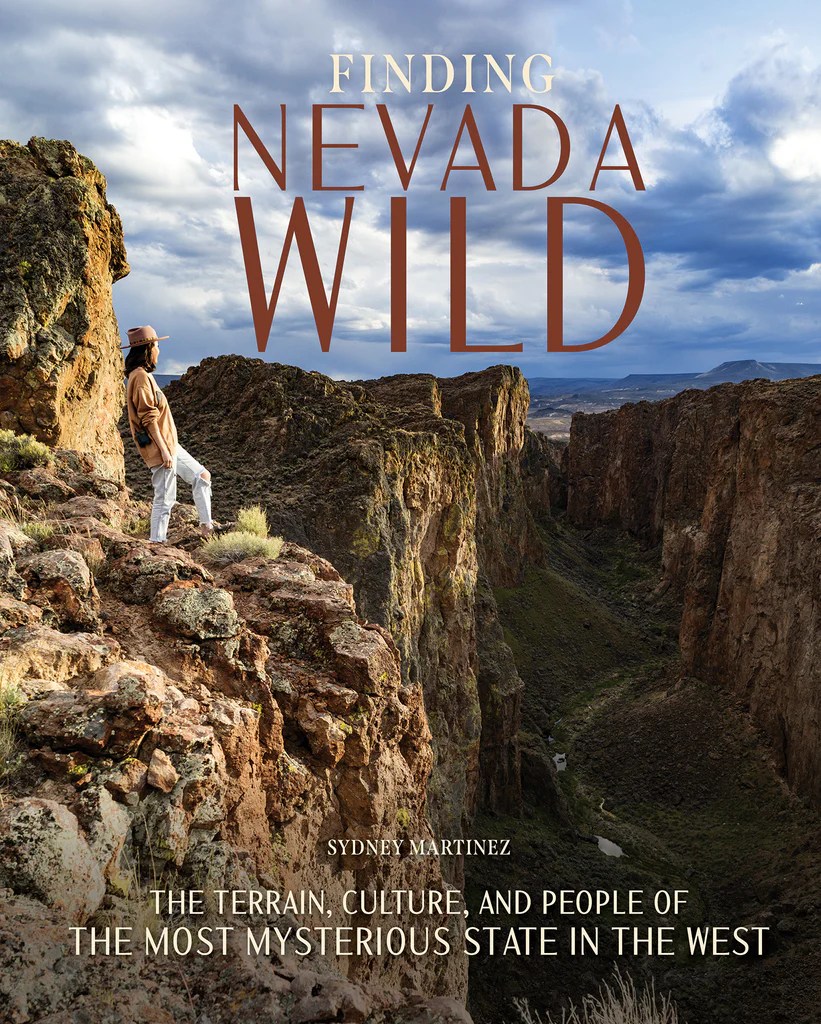
An outgrowth of Martinez’s Legends of Lost Nevada blog, Finding Nevada Wild draws readers to the lesser known, more mysterious parts of the state. The book is packed with original photographs, though it’s more of a travel guide than a professional visual arts volume. Martinez offers great tips for campers and hikers, as well as for motorists looking for something a little different. Many of the pictures here feature either Martinez’s husband, Jonathan (a former Eagle Scout and expert outdoorsman), or her German shepherd, Elko, as they explore the vast environs of the Silver State in their Toyota Tacoma. But the spirit of amateurism doesn’t mean that the photos are without merit. The book’s arresting cover image, for example, offers a vertiginous view of Thousand Creek Gorge, in the northwest corner of Nevada, one of many celebrated off-the-beaten-path destinations. Another absolutely stunning picture (featured in Martinez’s blog post on the subject) captures flowers blooming in the Jarbidge Wilderness Area. The sight lines here are phenomenal; as Martinez notes, “Jarbidge has some of the most pristine air quality in the United States,” a clarity evident from the photograph.
Thematic chapters also inform readers about the state’s picturesque back roads, iconic rural bars, legendary ghost towns, and hottest hot springs. The best photo in the book was taken from within the abandoned machine shop at Berlin Ghost Town in Nye County. Husband and dog sit in a sunny open doorway, staring down a winding dirt road toward the hilly horizon a hundred miles in the distance. Meanwhile, the shadowy interior of the dilapidated building is pierced by dozens of tiny holes in the old wooden sides, allowing pinpricks of light to pop through like stars in a nighttime desert sky. It’s a terrific photographic achievement, wedding the wild environment to the ruined remains of civilization.
Finding Nevada Wild draws readers to the lesser known, more mysterious parts of the state.
The Reno-based author tends to favor areas around Northern Nevada, but Martinez crisscrosses the entire state in her search for travel treasure. She seems especially enamored of Goldfield, suggesting that the “the physical personification of Nevada” can be felt in that tiny town more powerfully than anywhere else. Her book is an impressive work of state boosterism, especially regarding the enormity that is too often dismissed as emptiness. Pointing out that Nevada is larger than England and has more public lands than Alaska, Martinez explains that the best way to appreciate the state’s many beauties is to set up camp in a remote location and carefully explore the surroundings. And she advises her readers to prepare appropriately—by keeping a shovel, a gun, and a water purification system in the vehicle at all times. “You don’t get to see the cool shit if you can’t commit to a few days of being dirty,” she explains. Nevada really opens up when you get away from the electric lights and indoor plumbing.
As recorded in Finding Nevada Wild, the benefits to such an adventurous spirit seem amazing. Martinez offers great tips for weekend trips—like the difficult-to-access Overland Lake, outside of Elko, or the Kirch Hot Springs near Lund. (The beautiful Liberty Lake, located along the Ruby Crest Trail, is featured in a standout photo.) Pointing out that Nevada is one of the best states in the nation for stargazing, Martinez notes that Massacre Rim has been designated an International Dark Sky Sanctuary, affording some of the best views of the Milky Way. She also calls attention to the state’s wildlife. Along with the evening howls of the coyotes (she blames Mark Twain for villainizing these resilient and relatively harmless creatures), the mating call of the sage-grouse receives her praise as a highlight of the state’s natural soundtrack.
The book is primarily the result of Martinez’s firsthand experience exploring all that Nevada has to offer. But she also dips into the state’s history. While the endnotes betray an overreliance on Wikipedia articles, Martinez has a healthy set of recommendations for Nevada reading—including Nell Murbarger’s 1958 study Sovereigns of the Sage, Robert Laxalt’s 1974 essay “The Other Nevada,” and Willy Vlautin’s 2018 novel Don’t Skip Out on Me.
Overall, Finding Nevada Wild is a handy reference for planning to get outside of Las Vegas and see the rest of the state.

