Taylor Swift, The Life of a Showgirl (Republic Records)
Taylor Swift is in her showgirl era. Her 12th studio album, The Life of a Showgirl (TLOAS), marks Swift’s return to pop music and a reunification with Max Martin and Shellback, producers on her other pop albums Red, 1989, and reputation. Fans of Swift’s indie albums folklore and evermore, the synth-pop concept album Midnights, or the emotional and lyrical magnum opus that is The Tortured Poets Department will be disappointed in the bop-pop style of TLOAS. Swift’s “sad girl autumn” aesthetic has been replaced by that of a glitter-pen-wielding showgirl. This showgirl rises from humble origins to center stage, attaining a lifestyle of fame and opulence. However, the glittering veneer is revealed to be superficial and empty. These are themes that Swift explores in her album—but also describe The Life of a Showgirl itself.
TLOAS is not Swift’s first foray into the world of a showgirl. Her 2022 music video “Bejeweled,” from the Grammy-winning Midnights, explicitly previews Swift’s showgirl era. In the video, she portrays a Cinderella-esque character who rises from the kitchen floor to attend the royal ball and talent show with the help of Fairy Goddess Dita Von Teese. Von Teese gives Swift a lesson in burlesque dance, and the two demonstrate their skill by performing a number in adult-sized martini glasses (a routine that is central to Von Teese’s residency at The Venetian). Employing her new dance skills in an ostentatious showgirl routine, Swift wins a proposal from the prince, but she ultimately takes the castle while leaving the man—rejecting the supposed reward of romantic love (or at least a marriage contract) in favor of material wealth and continued work. For Swift, the showgirl represents empowerment through femininity. The revealing outfits and tantalizing dances, which could be construed as pandering to the male gaze, are instead a tool that she and other showgirls wield to achieve their dreams.
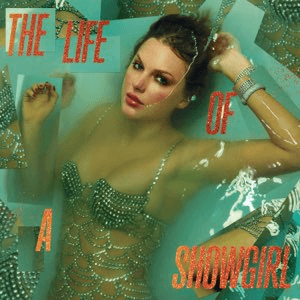
Now several years after her initial turn as a showgirl, Swift returns to the persona with a new, more jaded perspective. TLOAS was written while Swift was traveling for her career-retrospective Eras Tour, a grueling 149-show megatour that lasted nearly two years. She undoubtedly saw herself as a showgirl, repeatedly performing the same physically demanding, high-caliber routine regardless of her own health or personal issues. During the Eras Tour, Swift broke up with long-term boyfriend Joe Alwyn and had a messy situationship with The 1975 frontman Matty Healy (relationship details that provided inspiration for the expressive The Tortured Poets Department). At a moment when she was questioning her romantic fate, a professional football player showed up at the Kansas City concert with a friendship bracelet with his phone number. This recent history set the stage for TLOAS. Swift’s showgirl is now a professional who has achieved unprecedented fame and success but struggles with the costs.
Much of TLOAS demonstrates a conflict between the benefits and drawbacks of fame, a theme most explicitly explored in the title song. “The Life of a Showgirl” closes the album and features Sabrina Carpenter, who has been heralded as one of Swift’s pop successors. In the song, an aspiring showgirl approaches Kitty, a long-time performer, to express her admiration for Kitty’s life. Kitty, who seems like the lyrical version of Pamela Anderson’s aging performer from The Last Showgirl, warns the singer that “you don’t know the life of a showgirl, babe / and you’re never gonna wanna.” But the singer dismisses Kitty’s warning and eventually finds success despite challenges like intense competition, constant hustle, and fear of rejection. The women in the song illustrate the “pain hidden by the lipstick and lace” yet still choose the life of a showgirl and “wouldn’t have it any other way.” The song ends with audio from Swift and Carpenter closing a performance of the Eras Tour. The recorded audio echoes the interaction between Kitty and the aspiring showgirl, as Swift, now the veteran showgirl, welcomes the next generation of showgirls to the stage. As showgirls, Swift and Carpenter have both made sacrifices and deals with the devil that are alluded to in the titular song and throughout the rest of the album. Ultimately, as the closing to the album, “The Life of a Showgirl” vindicates these decisions.
The clearest sacrifice that the life of a showgirl requires is that of romantic love. In her previous album, The Tortured Poets Department, Swift begs the Fates to “change the prophecy / don’t want money / just someone who wants my company.” Like a showgirl “married to the hustle,” she worries that she has sacrificed the possibility of love for her career and material success. TLOAS opens with “The Fate of Ophelia,” which is also the first single for the album. In this catchy, upbeat tune, Swift positions herself as a maiden trapped in a purgatorial tower awaiting rescue by a noble lover, who saves her from the tragic end met by Shakespeare’s heroine. Longing for a fairy-tale romance has been common in Swift’s lyrics, but in 2025 it’s perverse to think of her as a damsel in distress waiting for a man. Ophelia had few options besides marrying a brooding Danish prince; Swift’s fate was not so limited. The comparison to Ophelia rings false but underscores the evolution of Swift the showgirl: now she wants both the castle and the man.
Swift carefully built her career on her persona of the relatable girl next door who wears T-shirts and sneakers, but now she name-drops the designer brands.
Now that Swift is saved from Ophelia’s fate, she must determine how to balance romantic love with the showgirl limelight. Throughout TLOAS, Swift juxtaposes wealth with love, establishing enduring romance as the ultimate luxury good that cannot be purchased, even by Time’s Person of the Year. In “Elizabeth Taylor,” she asks the song’s namesake (another Taylor with a streak of failed romances) if her current love will last forever. Detailing the material markers of her success while suggesting their value is diminished without true love, she offers to “trade the Cartier for someone to trust” before a wry aside of “just kidding.” Swift is not willing to concede material success for romance despite her concern that her success has contributed to her relationship woes. In “WI$H LI$T”, she catalogues desired objects like designer sunglasses, international awards, and surgically-enhanced physiques in contrast to her simple list of a “best friend who I think is hot” and an eventual life together with children, a home, and privacy. Luckily for Swift, she now has the man and castle (actually, multiple castles across the world).
Swift’s attainment of romantic love provides fodder for the album’s saccharine, mostly forgettable love songs. In “Honey,” she celebrates her partner for the bare-minimum actions of a respectful relationship, like complimenting her and using endearing pet names. Swift is also seemingly satisfied in other areas of her union, as evidenced by the bawdy puns abounding in “Wood,” including references to Kelce’s anatomical resemblance to a giant conifer. She is happy in this honeymoon phase, and she deserves it after a dating history that inspired the bridge of “The Smallest Man Who Ever Lived.” But even as Swift pulls back the curtain in TLOAS to reveal the “not so glamorous” reality of mega-success, she does not apply this same scrutiny to love. The trio of love songs on TLOAS (“Opalite,” “Wood,” and “Honey”) have the emotional depth of a Vegas showgirl revue. There are a lot of sequins, feathers, and fake smiles that entertain but do not edify the audience. The songs lack Swift’s characteristic storytelling and wry humor. There are no glimpses into the small moments (“dancing ’round the kitchen in the refrigerator light”), conflicts (“Every mornin’, I glared at you with storms in my eyes”), and questions (“Would it be enough if I could never give you peace?”) that distinguish relationships based in reality from fairy tales. Instead, the love songs on TLOAS announce that Swift is in love with all the subtlety of a neon marquee.
The Life of a Showgirl offers what appears to be a glamorous, easy, and at times raunchy existence. But with further examination, the artifice of the performance and its incongruities become apparent. Swift carefully built her career on her persona of the relatable girl next door who wears T-shirts and sneakers, but now she name-drops the designer brands. She decries materialism and yet has marketed 38 variants (so far) of the same album to increase profit. She spent years working to acquire the rights to her musical legacy but suggests it is worth little without a man. Swift’s almost 20-year-long career has redefined what is possible for a showgirl, but TLOAS is not the album that will empower future generations of showgirls to push boundaries as Swift herself has.
 Las Vegas Review of Books