Gareth Harney, A History of Ancient Rome in Twelve Coins (Atria Books), 368 pp. Hardback, $29.99.
In a time when credit cards, PayPal, and Apple Wallets are nearly ubiquitous, one might think that hard currency would be soon headed for the same cultural oblivion that swallowed the fax machine and the 8-track. But recent political disputes and public debates about the presence (or absence) of Alexander Hamilton, Andrew Jackson, and Harriet Tubman on our paper money demonstrate that physical cash still possesses symbolic capital in America, through the images we place on the various denominations.
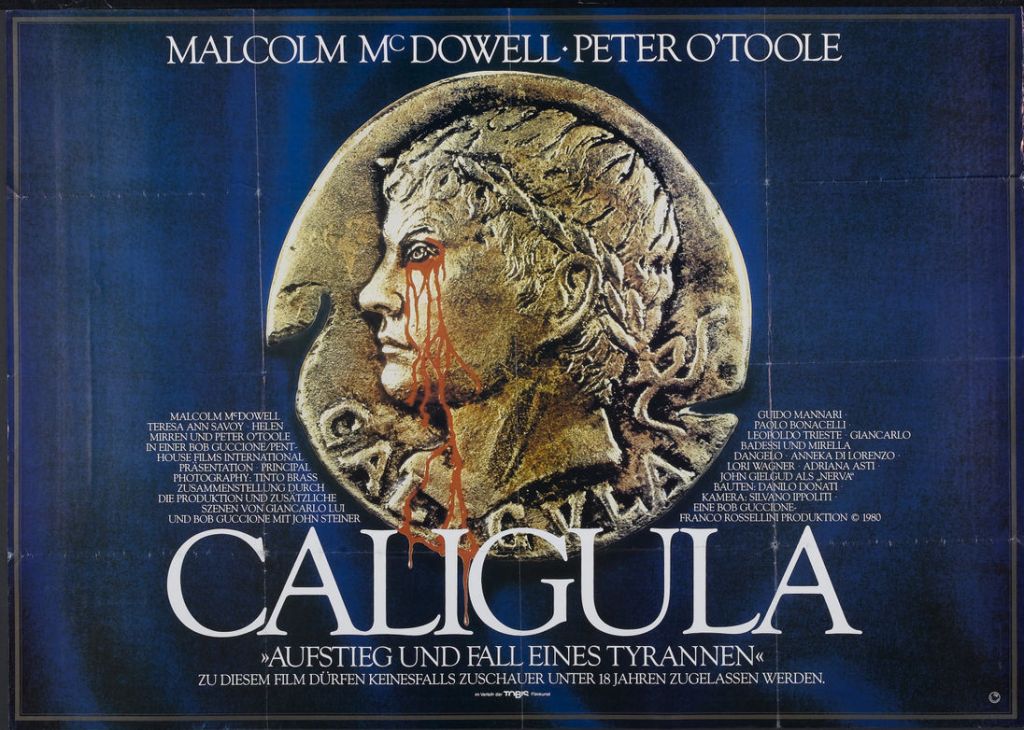
The roots of our emphasis on pecuniary imagery, of course, go back to classical antiquity. Like the bleeding eyes of the Caligula coin on the poster for that infamous 1979 movie, the face of a living emperor on a coin seems to tell us much about the imperial culture over which he ruled. Gareth Harney, a historian and coin collector, has produced an intriguing new monograph that not only explores this numismatic phenomenon but does so while telling a full historiographic narrative of ancient Rome—from its supposed origins in the eighth century BCE to its alleged “fall” in the fifth century CE. The unconventional hook that ties all the chapters together, this focus on numismatics, inevitably magnifies certain historical figures at the expense of others without connections to coinage, but overall Harney has produced a successful study of Roman culture that will resonate with contemporary American readers.
Coins are unique among the items we possess from classical antiquity; as Harney notes, “they are the only handcrafted pieces of ancient art freely collected by enthusiasts of all backgrounds across the world.” And unlike monumental architecture, which tends to emphasize the local aspects of the ancient world, coins can’t help but compel us to consider how global—cosmopolitan, even—the Roman Empire could be: it is kind of amazing, as Harney points out, that two thousand years ago the same little piece of metal could buy you bread in both Scotland and Iraq.
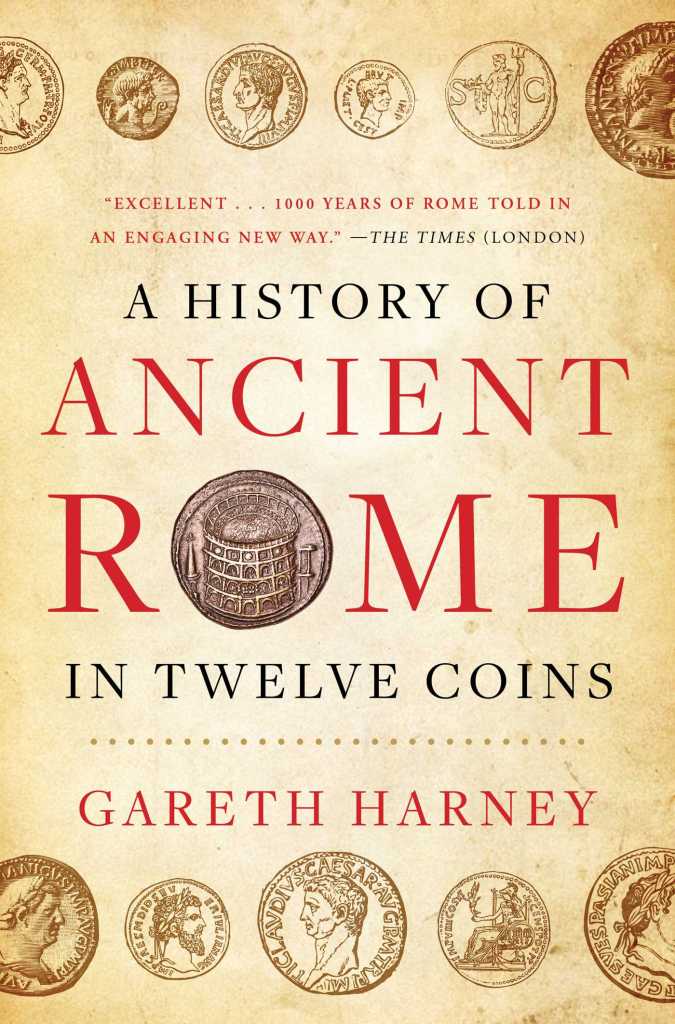
As a work of ancient history, Harney’s book gives us a fairly standard (but intellectually responsible) account of Rome’s rise from a village on the banks of the Tiber to a Mediterranean superpower. The book aims for a popular audience and thus perhaps gives undue attention to gladiators and the arena, although this offers Harney a chance to show some wonderful images of the Colosseum on coinage. As a fan of antiquity, Harney clearly prefers the Empire to the Republic, and he devotes basically an entire chapter to Marcus Aurelius (which allows him to discuss at length his other passion: Stoic philosophy, which he compares to Cognitive Behavioral Therapy and whose increasing contemporary popularity he notes approvingly). During the later chapters he also provides a very clear analysis of the problems with currency debasement that plagued the Roman Empire during the so-called Third-Century Crisis, in which Rome was afflicted by hyperinflation as well as military instability and a rotating cast of claimants to the imperial throne (most of whom minted coins with their faces on them). Each chapter begins with an almost novelistic vignette, with prose verging on purple (“The morning mist hangs low over the wide Danube,” starts Chapter 8), which frankly did not seem to add much.
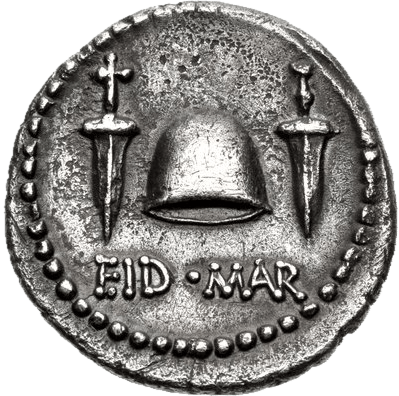
What Harney does especially well is to tie various coins and their imagery, or even the history of their production, into the larger story about Rome that he is telling. The famous “Ides of March” denarius celebrating Brutus and featuring daggers and a freedman’s cap, for example, is explicated and integrated into the narrative about Julius Caesar’s doomed rise to power. The drawback to this approach is that Harney gives certain eras less focus than they deserve for what were probably numismatic rather than historical reasons: there is hardly a sentence on the Roman Republic’s many wars in the Greek world, only a couple pages on the emperor Nero, and not a single mention of the Gracchi Brothers, whose careers explain so much about the fall of the Republic. A recent review in the TLS also notes the unfortunate absence of provincial coinage by cities at the edge of the empire, denying us the chance to see a different perspective of Roman power.
Although there are many helpful black-and-white illustrations of coins throughout the work, the book also includes color plates; these feature an awkward mix of more coin images (which don’t really need color to be understood) and other artworks from antiquity. The book also contains two much-appreciated appendices: a very helpful list of illustrations, which describes the coins shown in each chapter (much more than twelve!), and a recommended reading list for numismatists looking to explore further. And one can always judge an ancient history volume by the quality of its maps, so it’s nice to see an excellent map of the Roman Empire at its height in the introductory material.
It is kind of amazing, as Harney points out, that two thousand years ago the same little piece of metal could buy you bread in both Scotland and Iraq.
“Perhaps more than any other artifact, coins offer us a tangible and immediate connection to our ancient past,” writes Harney. When one holds an aureus of Trajan between one’s thumb and forefinger and examines the depiction of Trajan’s Column on the reverse side (an illustration included in Harney’s book), one experiences the coin and its messages little differently than a Roman would have nearly two millennia ago.
Coinage had a beginning, and thus it may have an end; physical coinage may very well be eliminated in our lifetimes, as Harney posits. If so, something will be lost. Consider the Vegas gambler who does everything today with plastic and electronic credits: will Benjamin Franklin mean nothing to him or her someday, except as an obsolete nickname for high-quantity payouts? When we all handle the same coins and bills, we all familiarize ourselves with a canon of Americans who serve simultaneously as models of exemplary conduct and as collective possessions of our civic culture. Washington, Lincoln, and FDR instruct us, but they also belong to us, and their faces on currency bind us all to them and to each other as fellow citizens. Once money is just bits and bytes, another avenue of shared civil sentiment disappears.
In an 1835 sonnet, Wordsworth imagines that while “antiquarians” might merely dig in the dirt for relics, “the Bard, a Seer” could conjure up Trajans and Maximins before one’s own eyes. Harney, whose numismatic obsession began with a Trajan coin given to him as a boy by his grandfather, has conjured up a similarly evocative vision of Roman history in this appealing volume.
 Las Vegas Review of Books