Gabriel Urza, The Silver State (Algonquin), 320 pp. Hardback, $29.00.
Seven months into his job as a Washoe County Public Defender, young attorney Santi Elcano finds himself holding a toy basketball in the DA’s office. Neil Hadley, the veteran prosecutor, has a game he likes to play with new PDs: shoot the ball into the little hoop in the corner, and you get what you want (dismiss a count, minimum sentence, etc.); miss the shot, and your client is looking at the maximum prison penalty. Years of life are potentially at stake.
“This is fucked up,” says Elcano. But this is the game they play. As Hadley insists, the defendants are all guilty anyway. And by the end of his first year as a PD, Elcano can count on one hand the number of clients who might genuinely be innocent. He’s no Perry Mason. His job is to negotiate for a better plea bargain, to downgrade the charges, to mitigate the sentences. It’s “the work of bartering lives,” he explains, the work of balancing the scales the justice.
This is essentially what Elcano learns in his first two years as an attorney in Reno. But things begin to change when he and his older partner, C. J. Howard, are tapped to represent a defendant in a major murder trial, a high-profile case of a young woman assaulted and killed and dumped in the desert, her body discovered only after months of searching. The defendant, a young man of questionable intellectual accountability, is arrested and arraigned with relatively little evidence and a reasonable alibi: his mother swears he was with her on the night of the murder. He’ll face the death penalty if convicted. A case like this could be a big opportunity for the attorneys involved, but it requires real work from the defense team. They might be able to save a man’s life.
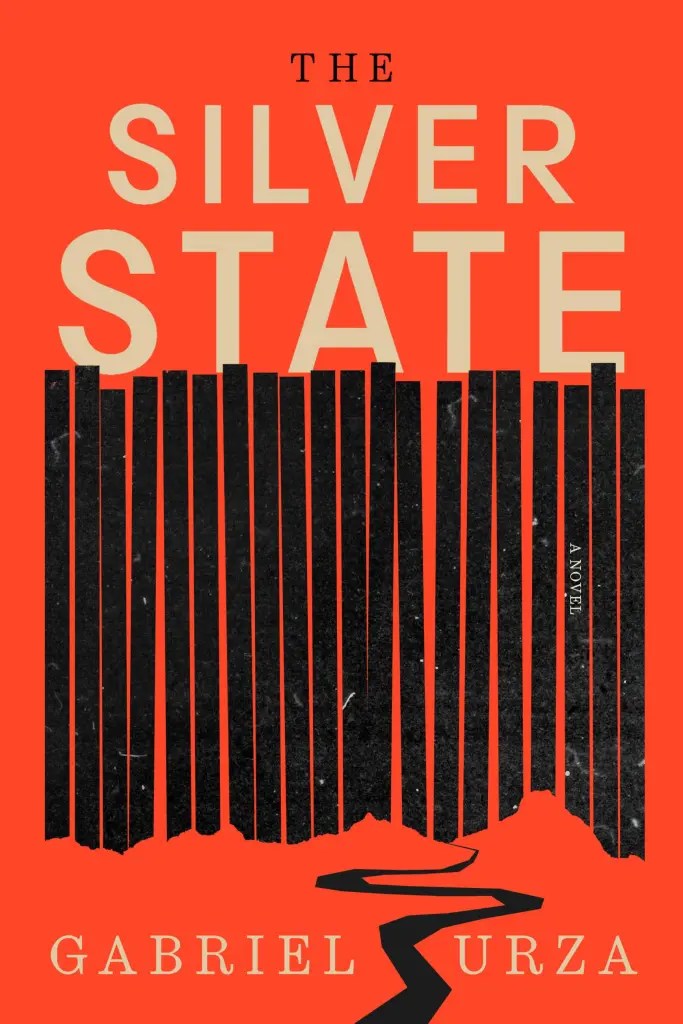
This is the setup of The Silver State, the new novel by Gabriel Urza. Urza, who now teaches fiction at Portland State University, was once himself a public defender in Reno, and he clearly knows the ins and outs of the job. In fact, much of what’s pleasurable about the novel comes from its inside view of the justice system particular to Northern Nevada—the courthouse, the offices, the relationships between judges and jailers, prosecutors and police officers, lawyers and lawbreakers.
But even more appealing is the novel’s charismatic protagonist and narrator. Santi Elcano is a multigeneration Nevadan, the scion of sheepherders. (He might be Basque, like Urza himself, a detail the novelist mentioned in an interview with Willy Vlautin for Nevada Humanities.) His entrance into the Washoe Country Public Defender’s Office is a homecoming; he had grown up in Reno and then attended college and law school elsewhere. Though he was only away for seven years, the Reno he returns to has changed—friends moved out, old casinos converted into condos, new suburban neighborhoods built and then abandoned. The seediness of the downtown district is the one familiar constant. “This is the Nevada I knew,” Elcano tells us, “slick-haired and shifty.” He’ll see much more of it as a PD.
“This is the Nevada I knew,” Elcano tells us, “slick-haired and shifty.” He’ll see much more of it as a PD.
Elcano’s problems are relatively straightforward, but Urza’s book shifts back and forth in time. It opens with a middle-aged Elcano—36 years old, with a wife and a young daughter, having been on the job for 11 years, stuck in the same position for longer than he had initially anticipated. But then the narrative quickly skips back to his beginnings as a PD, a 25-year-old fresh out of law school, still single and unattached. We follow him as he learns the ropes—how to negotiate, how to compartmentalize, and how to keep his mouth shut. It’s only a decade later Elcano will feel burdened, even tortured, by the mistakes he made as a young lawyer.
The shifting backward and forward in time isn’t really necessary for the business of this novel; it doesn’t add much to the story. The same could be said for the occasional passages in the novel that suddenly address the reader directly, in the second person (“you”), as if we are the members of a jury asked to deliberate upon what we’ve been reading. What works well is Santi Elcano himself, a born-and-raised Nevadan doing his best and trying not to become a cynical cog in the carceral machine.
Elcano appeals because, almost as soon as he gets his feet wet, he finds himself fighting just to keep his head above water. He inherits an office full of old paperwork and current case files, as well as an odd bust of a man’s head. (A defendant? A victim? A mentor? Who can say?) While trying to navigate the terrain of the courthouse, Elcano confronts defendants who have gotten lost—addicts, lunatics, delinquents, recidivists. He quickly adopts a noir mentality: “During the days I swam in a morass of violence, illegality, and vice. During the nights I did everything I could to forget that the day had existed. It was from this duality that a new marker began to emerge—the person I had been before the public defender’s office, and the person I would now always be.” How can you get up every day and face this world without turning away?
The central murder case in Silver State offers its own complex intensity and ultimately turns on a kind of legal conundrum that forces the reader to consider the proper path of prudence. In his Acknowledgments, Urza mentions being influenced by a classic legal ethics case featured in a 2016 episode of Radiolab. However, potential readers should beware: the case is a major spoiler for the novel. Better to save the podcast for later and to stick with Elcano on his own search for justice.
 Las Vegas Review of Books