Augusto Monterroso, The Rest Is Silence, translated by Aaron Kerner (NYRB Classics), 176 pp. Paperback, $16.95.
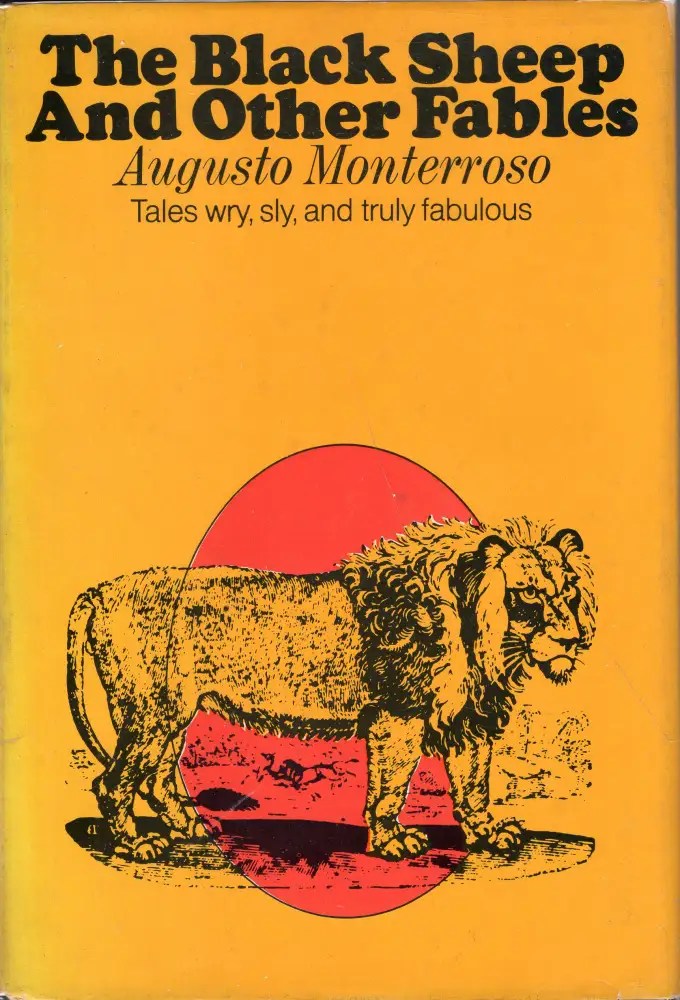
Augusto Monterroso (1921–2003) grew up in Guatemala and then spent most of his adult life in Mexico City. Part of the literary Latin American “Boom,” his works were first introduced to an English-language readership in 1971 with Doubleday’s publication of The Black Sheep and Other Fables, translated by Walter I. Bradbury, a collection of short, wry tales in the vein of Aesop and La Fontaine.
Monterroso became especially well known for his 1959 short story “The Dinosaur,” which consists of a single sentence: Cuando despertó, el dinosaurio todavía estaba allí. (“Upon awakening, the dinosaur was still there.”) He has often been received as a kind of humorist, though he’s not really a joke teller. (The title of his first book, for example, published in 1959, was Obras Completas—“complete works.”) As the Spanish American literary critic Will H. Corral has pithily put it, Monterroso is most famous for his “concision and wit.”

Lo Demás es Silencio first appeared in 1978. The Rest Is Silence, Aaron Kerner’s new translation, published by NYRB Classics, is the first English edition of this text. A slim work of fiction, it takes the form of a Festschrift, a collection celebrating the career of “Eduardo Torres,” an elder man of letters in the town of San Blas. Torres, it seems, has worked chiefly as the editor of the Sunday cultural supplement of a local newspaper, El Heraldo de San Blas, peppering the occasional review with references classical and modern, from Juvenal to Cervantes. His minor reputation as a local litterateur, however, has nevertheless stimulated the reflections of his associates.
The book begins with an epigraph, “The rest is silence,” inaccurately attributed to Shakespeare’s The Tempest. These words are actually spoken by a dying Hamlet; perhaps the author has in mind Prospero’s final soliloquy (“Now my charms are all o’erthrown …”)? It then proceeds from epigraph to epitaph. Despite the fact that the book’s fictional character of honor, Eduardo Torres, is not yet dead, we are given a supposedly self-authored inscription that will appear on the man’s tombstone upon his eventual demise. Torres, the curious epitaph declares, “came, saw, and was perpetually defeated as much by the elements as by the ships of the enemy.” A footnote then informs us that Torres’s neighbors claim to detect here “a slightly bitter note, a certain pessimism—inevitable, perhaps, in the face of the vanity of all human effort.”
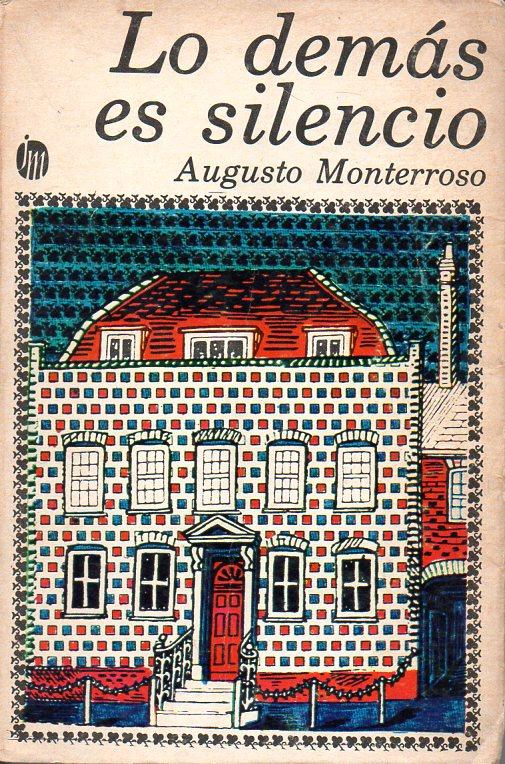
The rest of The Rest Is Silence is then divided into four parts. The first consists of “Tributes” to Torres by those who know him, and these are among the strongest pages in the collection. They begin with some introductory comments about Torres’s meager publication record by his former private secretary, who quotes the eminent author as saying that he would prefer rather “to dwell in the shade of Plato’s cave or that of the Porphyrian tree than to pace the public plazas of the world.” Next, Torres’s brother, Luis, recalls his sibling’s sloppy eating habits and a late-childhood tendency to soil himself—“an odd and unexpected lapse of sphincter control.”
If these reminiscences don’t seem reverential enough, we have lengthier “Memories of My Life with a Great Man,” by the young Luciano Zamora, who arrived in San Blas a poor youth and became Torres’s valet. They say that no man is a hero to his valet, but Zamora came to worship his employer. He recalls, among other things, the task of typing up Torres’s old handwritten correspondence and finding copious evidence of extramarital affairs; some of the letters from the women of San Blas, Zamora tells us, were so steamy and explicit that he would periodically need to “make a quick trip to the bathroom” to masturbate. Not to be outdone, Torres’s wife, Carmen, offers her own reflections. Less impressed by his machismo (when she would wake up in bed and “feel something strange and hard there between the two of us,” she says, “it was usually a volume of some novel” he fell asleep reading), Carmen calls him a phony and complains that he wasn’t much help with raising the children.
Fernando Pessoa meets Jorge Luis Borges.
The second section of The Rest Is Silence includes selections from Torres’s own writing, followed by a third section of Torres’s aphorisms. A fourth section features an “impromptu collaboration,” and, finally, an addendum offers a brief reflection by Torres on this volume. The short book runs out of steam by the end, having employed much of its best satirical energy in the opening pages. Torres seems, at times, a stand-in for Monterroso himself, who tended to write very short pieces and published sparsely. But he also offers a different avenue for self-deprecation: in an amusing review of The Black Sheep and Other Fables, Torres explains that the author, Monterroso, proceeds softly and slowly, adding that “this slowness is matched by the paucity of his production. Which means that not only does he make us wait but when he finally delivers, he does so in small quantities.” Here we basically get a version of the old Borscht Belt joke, “The food there is terrible. And such small portions!”
Small portions are at the heart of The Rest Is Silence. “These porous, portable fictions push against the boundaries of their smallness,” insists the critic Dustin Illingworth in his Introduction to this new translation. “They are whetted shards that almost escape the confines of the mosaic.” The book consists chiefly of sly faints and false allusions, spurred on by the slippage of pseudonyms and alternate identities. We might say that, here, Fernando Pessoa meets Jorge Luis Borges; with a wink and a nod, new names and fresh perspectives emerge every few pages.
Monterroso is often at his best when working in the briefest mode—the aphorism, the purest distillation of concision and wit. When a friend suggests that a powerful intellectual like Torres should run for political office, he politely declines, reflecting that “the quickest way to kill an idea is to put it into practice.” The section of the book on Torres’s “aphorisms, maxims, dicta, and apothegms” contains the true essence of Monterroso’s style. The definition of pesimismo (pessimism) is perfect—and conclusive: “When one door opens, a hundred close.”

 Las Vegas Review of Books