Nicola Yoon, One of Our Kind (Knopf), 272 pp. Hardback, $28.00.
Nicola Yoon’s One of Our Kind follows Jasmyn Williams as she moves her family from a Los Angeles neighborhood fallen victim to poverty, gangs, drugs, and police mistreatment to an all-Black suburban community with only successful professionals—which may sound like a utopia but turns out to be everything Jasmyn is fighting against. This captivating story complicates popular stereotypes about Black communities and suggests that it will take more than just Black solidarity to end police brutality.
Jasmyn is a successful Black defense attorney who helps lower-class clients fight back against the unfair practices of the justice system. Now that she and her husband, King, are well along in their careers, King wants the family to move to the prosperous community of Liberty, a suburb outside of L.A. consisting exclusively of Black professionals.
Liberty starts off like a dream. Everyone is successful, happy, and Black. For Jasmyn, a strong activist committed to helping her people, Liberty represents everything that other Black communities in America could one day become. But the appeal of a utopian Black society fades quickly as Jasmyn becomes suspicious of her new neighbors. Although they appear as Black Americans, they do not act accordingly. Jasmyn nervously realizes that “she’d felt more herself, which is to say Blacker, in her old neighborhood than she did here.” Liberty is a great community, but it is strikingly out of touch with Black culture—as if its residents are anxiously trying to separate themselves from other Black communities. They straighten their hair, cosmetically alter their lips and noses, and adopt Eurocentric standards. Astonishingly, these lawyers, surgeons, and business executives would change their physical features but would not speak out against the police brutality. Jasmyn comes to see them as race traitors.
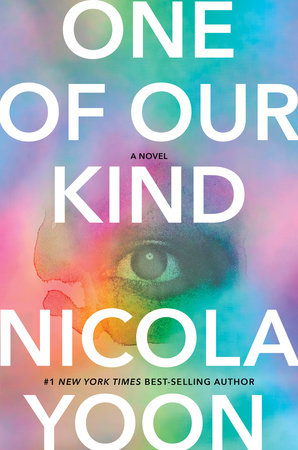
One Of Our Kind places the double consciousness of a Black American in a negative light. The Black residents of Liberty willingly give up their cultural roots. Jasmyn’s new neighbors were once loyal to the cause of fighting for Black liberation, but after living in Liberty for a few months, these once-proud activists began to change their beliefs and their physical appearances. Their desperate transition is clearly upsetting to Jasmyn, and her feelings of betrayal and grief are central to the novel. In an interview for Elle, Yoon—who had found success as a YA author and is now targeting a maturer adult readership—explained that she drafted the book very swiftly in the summer of 2020, following the murder of George Floyd: “There was a lot of despair; there was a lot of anger.”
The contrast that Yoon creates between Jasmyn and other members of the Liberty community emphasizes the fact that one can be unapologetically Black and still be an outstanding professional. Jasmyn wants her Liberty neighbors to understand that they do not need to cut or straighten their afros, that they do not need to hide their anger at continued discrimination, and most of all, that they do not need to “act White” or act less Black in order to prosper. Yoon is thus using this book to reassure Black Americans they do not need to diminish their Blackness to be accepted in America.
Yoon’s characterization of Jasmyn, who carries the passion and fire of activism, is compelling. This protagonist takes on the role of a savior who refuses to take the money and leave her people behind in the Black American struggle, whereas the other Black residents of Liberty are actively working against her. It should be perfectly fine for a Black American to become successful and want to be left alone, removed from political issues, but something about that desire never sits right with Jasmyn.
Jasmyn’s determination to get Liberty members to help less fortunate Black neighborhoods almost begins to seem overbearing. Her overanxious hyper-involvement is not an example for everyone to follow; not all Black Americans need to be—nor can be—saviors for their people. Although Jasmyn feels otherwise, there is nothing wrong with a Black woman wanting to straighten her hair, or with Black individuals opting for plastic surgery to reshape their noses.
This novel affirms that the fight for justice cannot solely be a Black problem but must be every American’s fight.
Yoon ultimately differentiates between Black characters not to criticize cultural differences but to show that standing up against police brutality cannot just be a “Black thing.” It is perfectly fine if someone who is Black just wants to be seen as an American. Yoon’s point in creating this binary is not to attack Black Americans who have traded in their Black culture for American culture. The point of Liberty and One of Our Kind is to attack America for making police brutality strictly a Black problem for the Black community to fight. If all of America saw a problem with police brutality, then the Black Americans who only want to be seen as American, like the ones in Liberty, would recognize its injustice.
One Of Our Kind, while written for adult readers, is not terribly far removed from YA fiction. The chapters are short, the plot is easy to follow, and the characters’ backgrounds are not overly detailed. This all works in Yoon’s favor because her powerful call to unite for justice rings clearly for all Americans to understand. The book insists that the fight for civil justice cannot just be the Black communities’ fight. As Kashana Cauley notes in her New York Times review of the novel, the public cries for police reform, corporate diversity, and affirmative action following George Floyd’s murder now seem to have died. One Of Our Kind affirms that the fight for justice is not dead and cannot solely be a Black problem but must be every American’s fight.
 Las Vegas Review of Books